





 Telegram
AMR (Autonomous Mobile Robots): The Future of Warehouse Automation
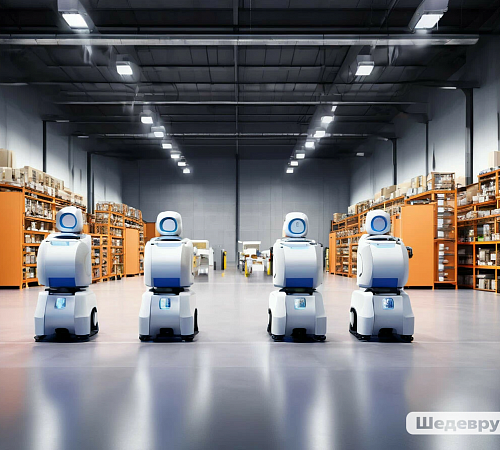
What are AMR?
AMR (Autonomous Mobile Robots) are autonomous mobile robots used to move goods and materials within a warehouse or manufacturing facility. Unlike traditional Automated Guided Vehicles (AGV), AMRs do not require predefined routes and can independently adapt to changing conditions within the facility.
How do AMR work?
AMRs use various technologies for navigation and task execution:
1. Sensors and cameras: AMRs are equipped with sensors and cameras that allow them to scan the environment and determine their position.
2. LiDAR: LiDAR (laser rangefinders) helps AMRs map their surroundings and avoid obstacles.
3. Artificial intelligence: AMRs use AI algorithms to analyze data and make real-time decisions.
4. Machine learning: AMRs can learn from accumulated experience and improve their performance over time.
Advantages of AMR
1. Flexibility and adaptability: AMRs can adjust to changing warehouse conditions and independently find optimal routes.
2. Increased efficiency: AMRs can operate 24/7 without breaks, significantly boosting productivity.
3. Reduced labor costs: Automating transportation reduces the need for manual labor in repetitive tasks.
4. Fewer errors: AMRs perform tasks with high precision, minimizing errors in goods handling.
5. Space optimization: AMRs can operate in narrow aisles and high-density storage environments, improving space utilization.
6. Improved safety: Automating hazardous and heavy tasks reduces the risk of workplace injuries.
Applications of AMR
AMRs are used across various industries and for multiple tasks:
1. Warehouse logistics: Transporting goods, loading/unloading, order picking, and inventory management.
2. Manufacturing: Moving materials and components between production areas.
3. Automotive industry: Transporting parts and components along assembly lines.
4. Retail: Automating order fulfillment and store replenishment processes.
5. Airports and ports: Handling baggage and cargo transportation.
How to choose an AMR?
When selecting an AMR, consider the following factors:
1. Task type: Define which processes you want to automate.
2. Layout and dimensions: Ensure the AMR fits your facility’s layout and operating conditions.
3. Performance and reliability: Evaluate speed, payload capacity, battery life, and system reliability.
4. WMS integration: Confirm compatibility with your Warehouse Management System (WMS).
5. Budget: Calculate total cost of ownership, including purchase, maintenance, and expected ROI.
Examples of AMR use
Many companies have already successfully implemented AMRs and achieved significant benefits. For example, Fetch Robotics offers AMR-based solutions that help automate warehouse operations and improve overall efficiency.
The future of AMR
AMR technologies continue to evolve, and in the future we can expect even more intelligent and autonomous systems. Advances in artificial intelligence and machine learning will enable AMRs to adapt to dynamic environments and perform increasingly complex tasks.
Conclusion
AMRs are not just a trend—they are a practical solution that can significantly improve the efficiency and safety of your warehouse or manufacturing operations. Implementing AMRs helps reduce costs, increase productivity, and optimize workflows. If you are not yet considering automation with AMRs, now is the right time to start.
If you have any questions or would like to learn more about AMRs, contact us. We will help you choose and implement the best solution for your business.
Присоединяйся к нам
в telegram
-
 лайф наших роботов
 -
самые крутые пилоты
-
говорим всю правду о разработке
