


 Telegram
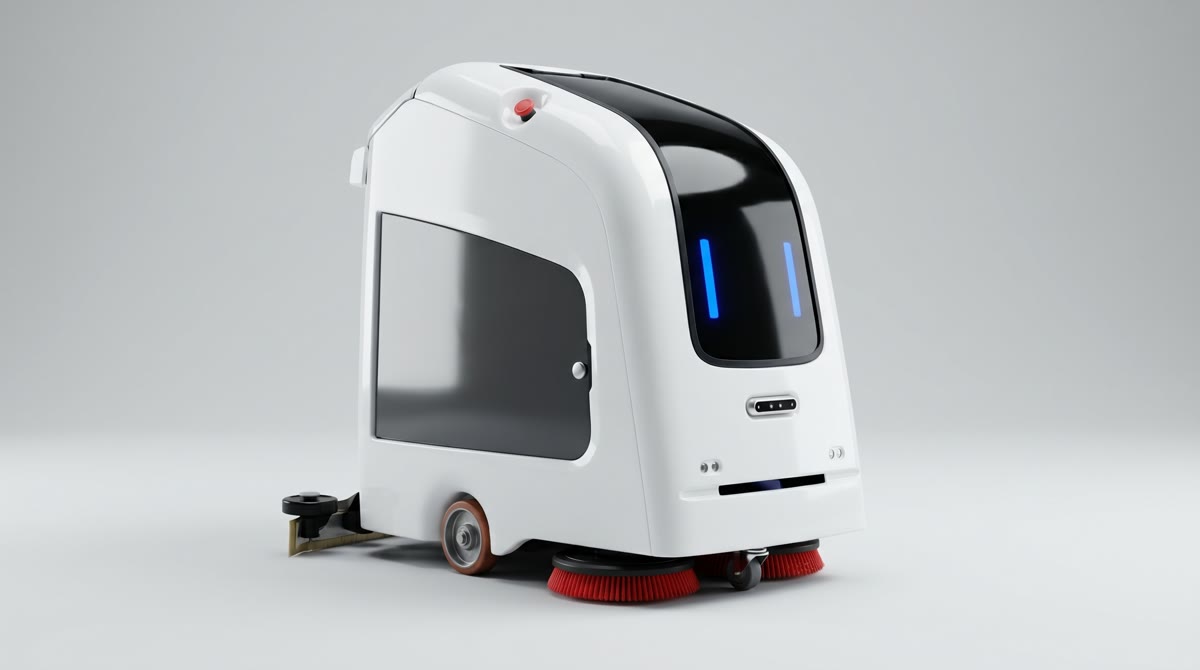
Cleaning robot for shopping malls and retail stores — Unit autonomous floor scrubber
Unit cleans galleries, atriums, food courts and retail floors on schedule — during the day between visitor peaks or at night when the mall is closed. Up to 80% lower cleaning costs and the same quality every shift.
- ≈1,718 m²/h (≈18,500 sq ft/h)in a mall pilot
- 0 incidentsin two mall pilots
- 3 cmfrom walls and shopfronts
- from $1,100rental per month
Why shopping malls switch to robotic floor cleaning
A shopping mall has to wash thousands of square meters every day: galleries, atriums, food courts and entrances. Manual cleaning means scrubber operators on every shift, a night crew, quality control and replacements for sick leave and vacations. And the result still depends on people: missed spots and rushed work at the end of a shift.
The Unit autonomous floor scrubber is a professional scrubber dryer without an operator. It follows a preset route, washes the floor with disc brushes and collects dirty water with a squeegee. Your cleaning staff can focus on the tasks a robot cannot do: restrooms, glass and spot cleaning.
Where Unit cleans in malls and stores
Galleries and atriums
Long routes among visitors. The robot follows a pre-built route at about 0.8 m/s and drives around people, promo stands and barriers.
Food courts
Frequent wet cleaning between visitor peaks on a schedule. The robot passes furniture and counters at a distance of 3 cm.
Hypermarket and supermarket floors
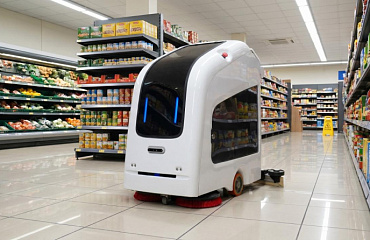
Aisles, shopping carts, goods in the aisles and shiny refrigerator bumpers — the exact conditions we stress-tested the robot in.
Night cleaning of the whole mall
When the mall is closed, the robot washes large areas without a night shift: up to 7,200 m² (≈77,500 sq ft) per charge, with a separate schedule for each zone.
Results of shopping mall pilots
Before purchase, we run Unit at the customer’s site and record real numbers: route area, cleaning time, productivity and every incident.
| Site | Route area | Time | Productivity | Incidents |
|---|---|---|---|---|
| Shopping mall A | 1,403 m² (≈15,100 sq ft) | 49 min | ≈1,718 m²/h (≈18,500 sq ft/h) | 0 |
| Shopping mall B | 1,190 m² (≈12,800 sq ft) | 46 min | ≈1,552 m²/h (≈16,700 sq ft/h) | 0 |
| Shopping mall C | 1,240 m² (≈13,300 sq ft) | 40 min | ≈1,840 m²/h (≈19,800 sq ft/h) | 4, fixed by map tuning |
Average robot speed on the route is 0.8 m/s. The robot follows a pre-built route, the way an experienced operator would.
Cleaning among shoppers: a hypermarket stress test
A sales floor is one of the toughest environments for a robot: shoppers with carts, pallets of goods in the aisles, and reflective shopfronts and refrigerators that confuse LiDAR-only navigation.
We ran a stress test of Unit in a busy hypermarket, analysed every problem situation and adapted the robot to these conditions. RTLS navigation works with radio beacons, so shiny surfaces and rearranged displays do not throw the robot off its route.

Safety around visitors
360° LiDAR
Detects obstacles around the robot and plans a detour.
Radar
Duplicates the LiDAR and stops the robot when an obstacle appears suddenly.
Stereo camera and neural network
Tell people from static obstacles and recognise glass, stairs and escalators.
RTLS navigation
Precise position from radio beacons — the robot does not get lost among people and shopfronts.
Sensors duplicate each other, so a single sensor failure does not make the robot unsafe.
Unit specifications for retail spaces
| Productivity | up to 7,200 m² (≈77,500 sq ft) per charge; 1,550–1,840 m²/h (≈16,700–19,800 sq ft/h) in mall pilots |
|---|---|
| Runtime | 5 hours on battery; station for water exchange and charging |
| Modes | wet and dry scrubbing, vacuum, polishing |
| Tanks | 50 L clean + 50 L dirty water, stainless steel |
| Body width | 560 mm — fits narrow store aisles |
| Squeegee | 800–820 mm |
| Navigation | RTLS radio beacons, sites up to 20,000 m² (≈215,000 sq ft) |
| Distance to walls and furniture | 3 cm |
| Control | scheduled cleaning, manual joystick mode, monitoring in RMS |
Full specifications — on the Unit cleaning robot page.
Pricing for shopping malls
1-year warranty, service support and software updates. Leasing available.
No upfront payment, from 6 months. Options with a docking station and a full service contract.
Launch on a limited area of your mall to measure real results.
More details — buy or rent, pilot, service.
How to launch the robot in your mall
Request and site survey
We discuss areas, opening hours and cleaning zones and estimate the payback.
1–3 day pilot
We build the map, run the robot on its route and record the numbers.
Contract and delivery
50% prepayment, about 2 months of production, delivery and commissioning.
Scheduled operation
The robot cleans on schedule; reports and alerts arrive in RMS.
The system watches.
Monitoring, alerts, a report after every cleaning run and maintenance by engine hours — all Unit robots in your mall in one fleet management system.
How RMS works →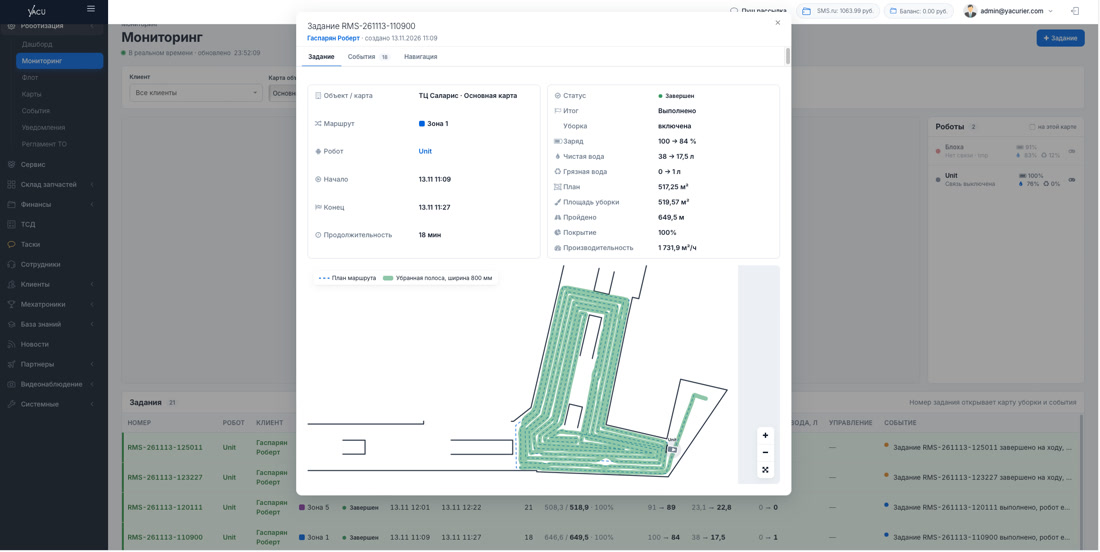
Frequently asked questions
Can a cleaning robot work in a mall during opening hours?
Yes. In two mall pilots Unit completed 1,200–1,400 m² (≈12,900–15,100 sq ft) routes during opening hours without a single incident. LiDAR, radar and a stereo camera with a neural network recognise people and drive around them, and the robot stops if an obstacle appears suddenly.
How much mall area can one robot clean?
Up to 7,200 m² (≈77,500 sq ft) per charge; in pilots productivity was 1,550–1,840 m²/h (≈16,700–19,800 sq ft/h). RTLS navigation covers sites up to 20,000 m² (≈215,000 sq ft): a large mall is split into zones with their own schedules, and several robots can work together.
Can the robot handle glass shopfronts and escalators?
Yes. The stereo camera and neural network recognise glass, stairs and escalators, and RTLS radio-beacon navigation is not affected by reflective surfaces, unlike LiDAR-only robots.
Is Unit suitable for supermarkets and hypermarkets?
Yes. We stress-tested it in a hypermarket with carts, goods in the aisles and shiny refrigerator bumpers and adapted the robot to these conditions. The 560 mm body fits between shelves.
How much does a mall cleaning robot cost?
Purchase is $25,500 with a 1-year warranty; rental starts from $1,100 per month with no upfront payment for 6 months or more; leasing is available. Savings on staff and cleaning services reach up to 80%.
Can we test the robot first?
Yes. A pilot on a limited area of your site takes 1–3 days. You get real productivity numbers and a savings estimate.
Related articles


Everything about the Unit cleaning robot
Leave a request — we will discuss areas and cleaning schedules, run a pilot and estimate your savings.
Or call us: +1 (888) 831-8224