


 Telegram
Retrofit autonomy kit for forklifts, AGVs and industrial vehicles
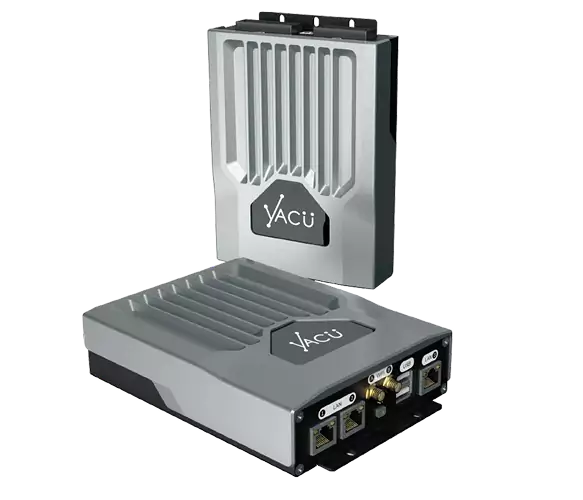
Driver is the autonomous driving platform behind our own Unit cleaning robots, CarGo 300 AMRs and FMR forklifts. Vehicle manufacturers and integrators can put the same hardware and software on their machines instead of building autonomy from scratch.
- from $6,000autonomy kit
- QR · SLAM · RTLSnavigation modes
- 3 product linesrun on Driver today
- No ROSown codebase, no black boxes
Autonomy without building it from scratch
Building autonomous navigation in-house takes years: localisation, path planning, obstacle avoidance, safety logic, fleet software. Most vehicle makers want an autonomous version of their machine, not a robotics R&D department.
Driver is a ready suite: a controller, a sensor package and software that we have refined on our own robots in warehouses, factories and shopping malls. You keep your chassis, drive train and brand — Driver adds the autonomy.

What is in the kit
| Controller | On-board computer with Driver software: localisation, path planning, motion control, safety logic |
|---|---|
| Sensors supported | Lidars, radars, stereo cameras, RGB cameras, ultrasonic sensors — selected for your vehicle and environment |
| Navigation | QR markers, SLAM and RTLS global navigation; hybrid SLAM+RTLS for large and changing sites |
| Obstacles and safety | Automatic detours, speed adaptation near people and before turns, dual-layer collision avoidance (local and global) |
| Routes | Pre-set routes and roads between points, drawn in an engineering editor; free navigation around obstacles |
| Control | Smartphone app, web interface, integration with WMS / MES / ERP |
| Fleet management | RMS robot management system: monitoring, alerts, maintenance, reports |
| Software stack | Our own codebase — no ROS or third-party middleware, so there are no “black boxes” |
The exact sensor package and price depend on the vehicle, speed, payload and site. Kits start from $6,000.
Who the kit is for
Forklift and tugger manufacturers
Add an autonomous version to your line-up — pallet moves between zones, tugger trains, line-side delivery.
AGV makers moving to AMR
Replace magnetic tape and reflectors with SLAM+RTLS navigation and obstacle avoidance on your existing platform.
Integrators and fleet operators
Automate specific vehicles for a customer site and manage the fleet in one system.
Proven on our own robots
Unit cleaning robot
Industrial floor scrubber: up to 1,840 m²/h (≈19,800 sq ft/h) confirmed in shopping mall pilots. Unit →
CarGo 300 AMR
Moves loads up to 300 kg at 0.8 m/s, 5 hours of driving per charge. CarGo 300 →
FMR forklift
Autonomous pallet stacker with global navigation across the warehouse. FMR →
Self-driving car
A Toyota Prius automated by our team and tested on closed sites. More →
Three navigation modes
Different sites need different navigation. Driver supports all three and combines SLAM with RTLS where routes must be guaranteed. More in “RTLS navigation for autonomous robots”.
| QR markers | SLAM | RTLS | |
|---|---|---|---|
| How it works | Reads markers on the floor | Matches lidar scans with a map | Gets coordinates from radio beacons, like indoor GPS |
| Infrastructure | Markers on the floor | None | Compact anchors on walls or ceiling |
| Large and changing sites | Limited by markers | Can lose position | Stable on areas up to 20,000 m² (≈215,000 sq ft) |
| Best for | Fixed, simple layouts | Stable indoor layouts | Warehouses, plants, open areas |
What Driver 2.0 brings to motion
Smooth trajectories
Segment joins based on Reeds–Shepp paths: no jerks or micro-stops where straight sections meet turns.
Adaptive speed
The controller speeds up on straight sections and slows smoothly before turns, in narrow aisles and near people.
Dual-layer safety
A local layer reacts instantly to sudden objects; a global layer plans detours on the map.
Details in “Driver 2.0: how we made robots more confident”.
How a retrofit project works
Vehicle assessment
We review your vehicle: drive and steering control, payload, speed, the site and the tasks.
Sensor package
We select sensors and the navigation mode, and agree on mounting points and interfaces.
Integration and tests
We connect Driver to the vehicle, build maps and routes, tune motion and safety.
Pilot and fleet
The vehicle works on your site; the fleet is managed in RMS with monitoring and reports.
The system watches.
Tasks, routes, monitoring, alerts and maintenance for every vehicle running on Driver — in one fleet management system.
How RMS works →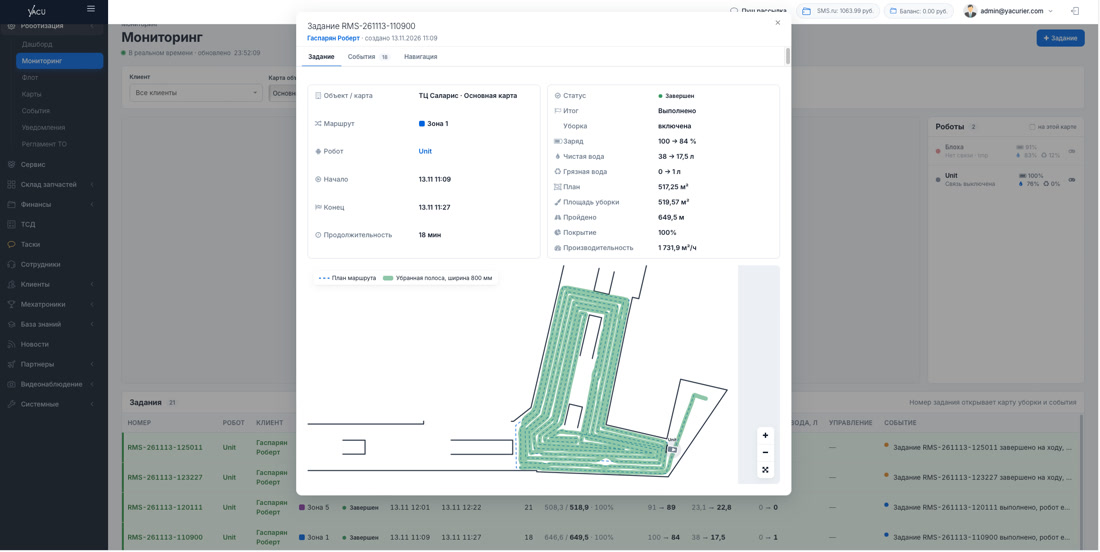
Frequently asked questions
Is Driver based on ROS?
No. The whole stack is our own code without ROS or other middleware. That gives us full control over behaviour, timing and safety logic and avoids “black boxes”.
Which vehicles can be retrofitted?
Wheeled vehicles whose drive and steering can be controlled electronically: forklifts and stackers, tuggers, platform carts, floor scrubbers and other industrial machines. We assess each vehicle before the project.
How much does the kit cost?
Kits start from $6,000. The final price depends on the sensor package, the navigation mode and the integration work for your vehicle.
Do I need to change my site?
For SLAM — no. For RTLS, compact anchors are mounted on walls or under the ceiling. QR navigation needs markers on the floor.
What about safety standards?
Safety requirements depend on the vehicle type and the market. Tell us your target standards (for example ISO 3691-4 for driverless industrial trucks) and we will discuss how to address them in your project.
Can the vehicles work with our WMS?
Yes. Tasks can come from a phone, a web interface or your WMS / MES / ERP, and the fleet is managed in RMS.


Autonomy by YaCu Robotics
Tell us about the vehicle, payload and site — we will come back with a proposed sensor package, integration plan and price.
Or call us: +1 (888) 831-8224