


 Telegram
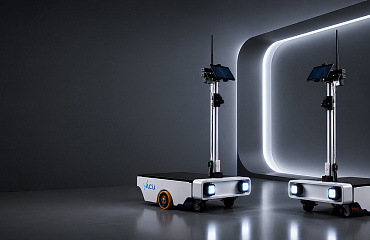
CarGo 300 AMR robot autonomous mobile robot for loads up to 300 kg in warehouses and factories
Not a cargo platform. Not an AGV on magnetic tape. A true 300 kg AMR with hybrid SLAM+RTLS navigation, phone-based calling and the Driver autonomy platform inside. It moves boxes, totes and parts between storage, production halls and assembly lines.
- 300 kgpayload
- 900×560×250deck, mm
- SLAM+RTLShybrid navigation
- from $14,500payback < 1 year

CarGo 300 in operation
CarGo 300 is an autonomous mobile robot for intralogistics. It moves loads up to 300 kg between storage, production halls and assembly lines: builds its own map, drives around people and forklifts, returns to its charger and works three shifts without breaks.
The robot targets the most common need in the market — regular movement of boxes, totes and parts that is still done by staff with manual carts or by expensive AMRs from large vendors.

CarGo 300 AMR specifications
| Robot class | Autonomous mobile robot (AMR) |
|---|---|
| Payload | up to 300 kg |
| Dimensions (L×W×H) | 900 × 560 × 250 mm |
| Average route speed | 0.8 m/s (≈48 m per minute), automatic slowdown near people and before turns |
| Battery | 5 hours of driving on one charge (≈14 km) |
| Navigation | Hybrid SLAM+RTLS: building map plus centimetre-level positioning |
| Infrastructure | No magnetic tape, wires or floor markers; RTLS anchors on walls or ceiling |
| Obstacles | Automatic detour; stops when a person or vehicle appears suddenly |
| Control | Smartphone app, web interface, WMS / MES / ERP integration |
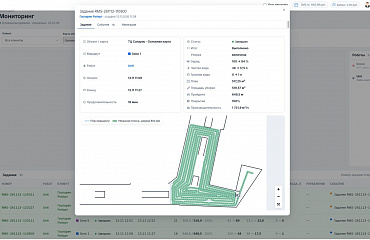
| Fleet management | RMS robot management system |
| Operating mode | 24/7, three shifts; automatic return to charging |
| Autonomy platform | Driver 2.0, developed in-house |
| Launch on site | within a few hours |
Configuration is matched to your site and routes. How many trips the robot makes and how many robots you need: How many CarGo robots do you need.
AMR, AGV or manual cart: the difference
Loads inside warehouses and factories are usually moved in three ways. A manual cart is cheap but needs a person for every trip. An AGV drives itself, but only along a fixed track — magnetic tape, wires or reflectors — and any obstacle on the track stops work until an operator arrives. An autonomous mobile robot needs no markings: it navigates by a map, chooses its own path and drives around obstacles.
| Manual cart | AGV | AMR CarGo 300 | |
|---|---|---|---|
| Person needed for each trip | Yes | No | No |
| Floor markings | Not needed | Magnetic tape, wires, markers | Not needed |
| Obstacle on the route | A person goes around | Stops | Drives around |
| Route change | — | Re-laying tape, days | In the app, minutes |
| 24/7 operation | Shifts only | Yes | Yes, charges by itself |
| Deployment time | — | Weeks to months | A few hours |
Why an AMR, not a cart
AGVs follow magnets and wires. Any deviation means a stop.
CarGo 300 is an AMR. It builds its own map, drives around obstacles and makes its own decisions. Deployment takes hours, not months.

AMR navigation: SLAM+RTLS hybrid
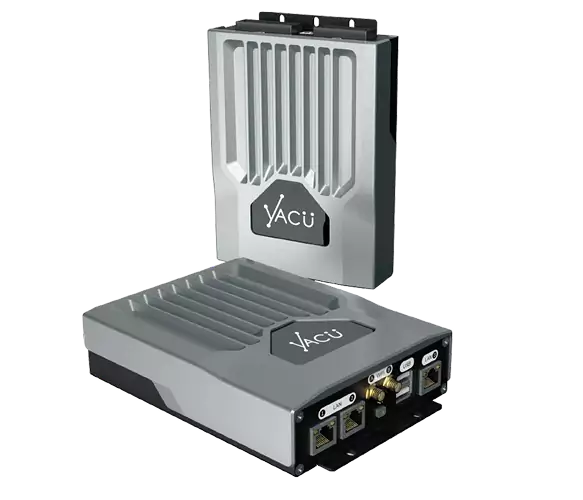
The scariest thing in automation is not its cost but unreliability. That is why CarGo 300 combines two approaches: SLAM gives the robot context of the building, RTLS gives an absolute coordinate grid — like GPS indoors.
SLAM — freedom
The robot remembers the hall, racks and columns after one drive. No markers or wires.
Together — 100% route execution
In any lighting, traffic and number of temporary obstacles. If a route is set, CarGo completes it.
RTLS — centimetre accuracy
The robot knows its position even if a passing forklift blinds it for a moment.
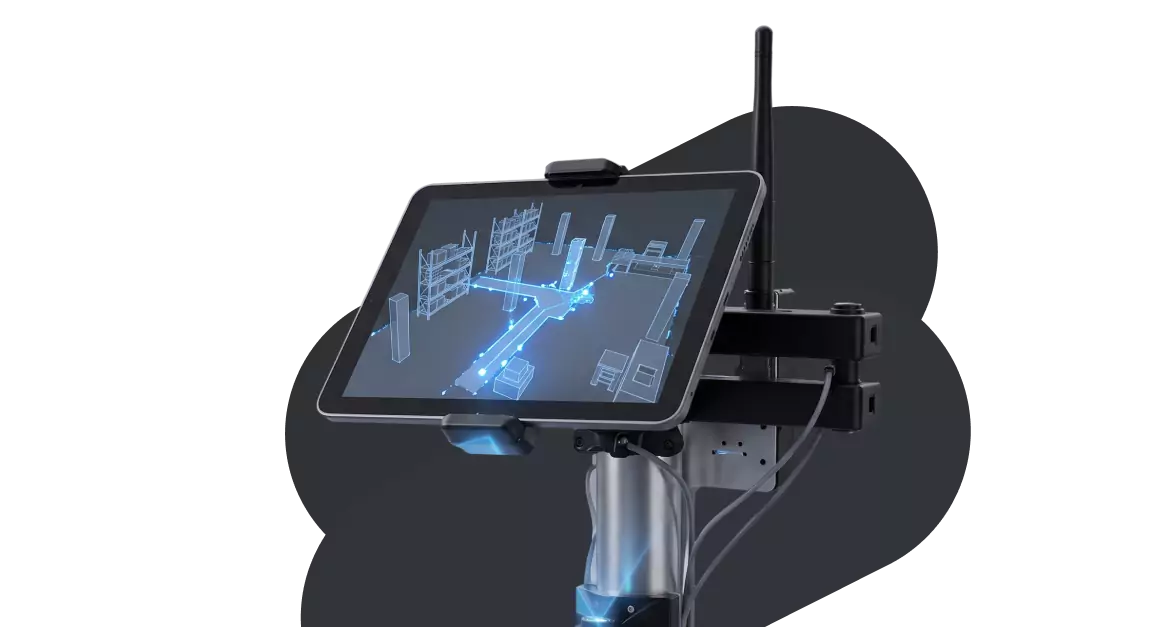
Control: call the mobile robot from any phone
Calling the robot from an app on any phone is a core feature. Open the app, choose a task, send it. You can also use a computer through the web interface or an integration with your system.
No remote controls, no laptops with special software and no “robot operators”: there is an employee, a task and CarGo. Tasks can arrive automatically from your WMS, MES or ERP, and a fleet of robots is managed in RMS. Change routes for current tasks in minutes.
Safety around people and vehicles
Two protection layers
The local layer works like an instinct: it stops or diverts the robot when a person suddenly appears nearby. The global layer plans detours on the map in advance.
Speed to suit the situation
An adaptive controller speeds the robot up on straight sections and slows it smoothly before turns, in narrow aisles and in areas with people.
Detours without stopping the mission
If an aisle is blocked, CarGo takes a detour in free mode and returns to the route when the path clears — without calling an operator.
All motion and safety algorithms are part of the Driver 2.0 platform.
Where to use the CarGo 300 mobile robot
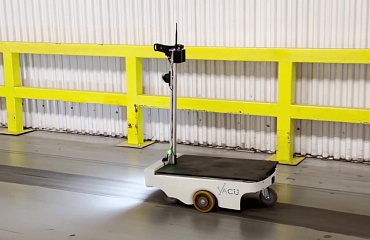
We did not design CarGo for a single industry. Warehouses, manufacturing, distribution centres, pharmaceuticals, automotive plants — everywhere there are loads up to 300 kg that need to be moved regularly. In its first deployment at a large automotive plant CarGo delivered parts from storage to the assembly line: a route of several hundred metres with dense traffic of people and vehicles.
Assembly lines
Scheduled and kanban delivery of components.
Industrial sites
Transport between halls and buildings.
Logistics hubs
Moving goods between receiving, storage, picking and shipping.
Production halls
Supplying blanks and removing finished parts.
More details: transport robot for warehouses and transport robot for manufacturing.
The Driver platform inside
CarGo runs on Driver, our autonomous driving platform. The same platform controls the Unit cleaning robot, vehicles and stackers.
It is not “firmware for one task” but a suite we have refined for years on Unit robots, self-driving cars and FMR stackers. In version 2.0 motion became smoother and more confident, and positioning more accurate on long routes.
You can buy Driver separately to automate your own vehicles. More about Driver.
How CarGo 300 is deployed
Task analysis
We discuss loads, routes, number of trips and shifts, and calculate how many robots you need and how quickly they pay back.
Map and routes
The robot drives through the site once and builds a map. If needed, we mount RTLS anchors and set loading and unloading points.
Launch and training
We connect the app and, if needed, the WMS/MES integration. Staff learn to call the robot in a few minutes.
CarGo 300 AMR price and payback
Depending on order volume. Payback is typically under one year.
No sick leave or vacations, three shifts, returns to charging by itself.
Mapping, points and routes in the app, short staff briefing.
The system watches.
Tasks, routes, monitoring and alerts — CarGo transport robots, forklifts and cleaning robots in one fleet management system.
How RMS works →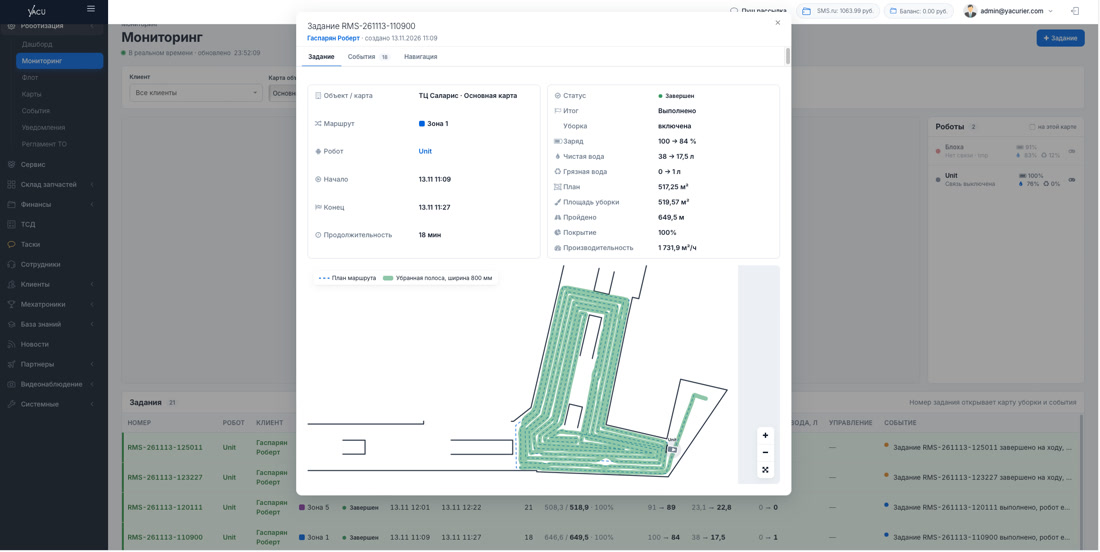
Frequently asked questions
What loads does CarGo 300 carry?
Any unit loads up to 300 kg in total that fit on the 900×560 mm deck: boxes, totes with components, containers, blanks, finished goods, packaging and waste. For pallets we offer the FMR autonomous forklift.
How is CarGo 300 different from an AGV?
An AGV follows magnetic tape, wires or markers and stops at any deviation. CarGo 300 is an autonomous mobile robot: it builds a map of the building, plans its path and drives around obstacles. Routes change in the app in minutes, without floor work.
Do we need to modify the building?
No. For SLAM, the robot drives the route once and remembers walls, racks and columns. For centimetre-level RTLS accuracy, compact anchors are mounted around the perimeter on walls or under the ceiling.
How is CarGo 300 controlled?
Calling the robot from a phone is a core feature. The web interface works in any browser, and the robot can be integrated with your WMS, MES or ERP. A fleet is managed in RMS.
Is it safe to work next to the robot?
Yes. Driver 2.0 runs two independent safety layers: the local one instantly stops or diverts the robot when a person appears, the global one plans detours on the map. Speed drops automatically in narrow aisles and before turns.
How long does CarGo 300 run on one charge?
The robot drives for 5 hours on one charge at an average route speed of 0.8 m/s — about 14 km. Loading and unloading use almost no charge, so on a 250 m one-way route one charge covers about 28 trips, almost a full shift. Detailed calculation: How many CarGo robots do you need.
How long does deployment take?
The robot goes into operation within a few hours, not months: a mapping drive, setting up points and routes in the app and a short staff briefing. If the site needs RTLS navigation, anchor installation is added.
Can the Driver platform be bought separately?
Yes. Driver is our autonomous driving platform that runs CarGo, the Unit cleaning robot and stackers. It can be installed on your wheeled vehicles. Details are on the Driver page.
How much does CarGo 300 cost?
From $14,500 depending on order volume. Comparable AMRs from other vendors often cost several times more for the hardware alone.
Related articles
 Case study: the CarGo 300 AMR robot at an automotive plant
 How many CarGo robots do you need: a calculation for warehouses and manufacturing
 Inside CarGo 300: a robot that simply picks up and moves loads
 How we built RMS: a robot management system that manages everything around robots
 Driver Software-Hardware Suite 2.0
 AMR (Autonomous Mobile Robots): The Future of Warehouse Automation
Warehouse and transport robots by YaCu
Leave a request — we will discuss loads and routes and send a presentation and payback estimate.
Or call us: +1 (888) 831-8224